 Training Guide
The Complete Guide to Progressive Overload
Build strength over time with small, measurable changes you can repeat.

“Progressive overload is not about lifting more every session. It is about improving over time while keeping the same good form.”
What is progressive overload?
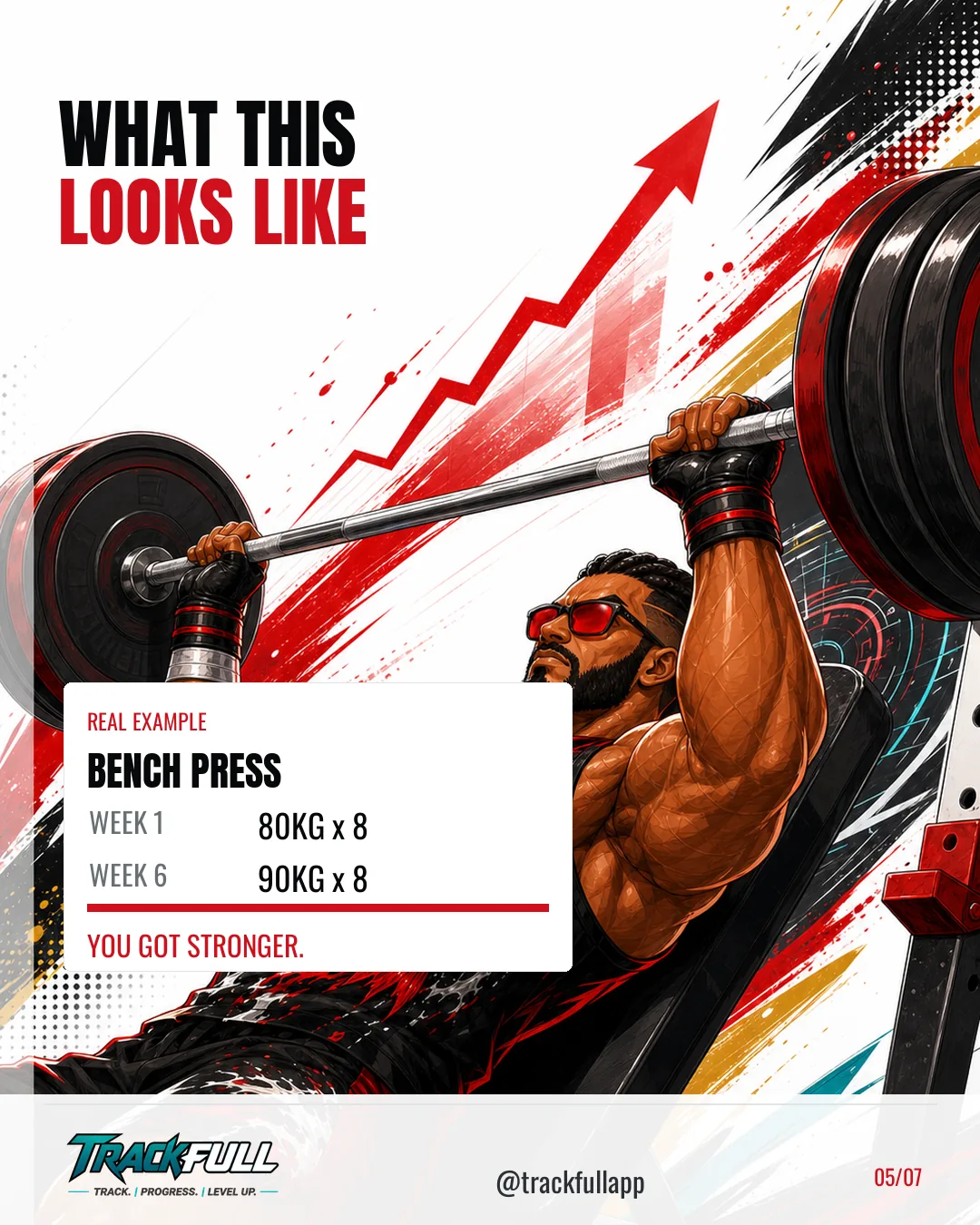
Progressive overload means gradually increasing the challenge as your current training becomes manageable. You can progress through load, repetitions, total work, or better execution—not just a heavier barbell.
Keep your exercise, range of motion, and rest reasonably consistent when comparing sessions. A logbook helps you spot a real improvement instead of guessing from how hard the workout felt.
Four ways to progress
Use a small load increase when the target reps are solid.
Add a clean rep at the same load.
Add a set only when you can recover from it.
Improve control or range before chasing numbers.
Why it works
Resistance training places a demand on your muscles and nervous system. Repeating an appropriate challenge, with enough recovery, can improve strength and muscle size over time. Soreness and muscle damage are not required signs of progress.
Train with a repeatable target.
Allow time and resources to adapt.
Raise one demand when ready.
Ways to apply it
Start with one measurable change
Choose one exercise, record the load, reps, sets, and a short technique note. Repeat the standard next time. When the target feels controlled, improve one variable and keep enough recovery between sessions.
Sources and further reading
Original coach carousel
The original social carousel contains English text.